Transforming local forests towards climate resilience and biodiversity


Forests around the world are already under significant pressure from climate change and environmental pollution. Rising temperatures, prolonged droughts, and increasing disturbances are weakening forest ecosystems and threatening their long-term resilience.
In my home region of Bavaria, one of the main challenges is rooted in the way forests were managed in the past. During the 1950s to 1970s, large areas were deliberately designed as monocultures, dominated by a few fast-growing and commercially valuable tree species such as spruce, pine, and larch.
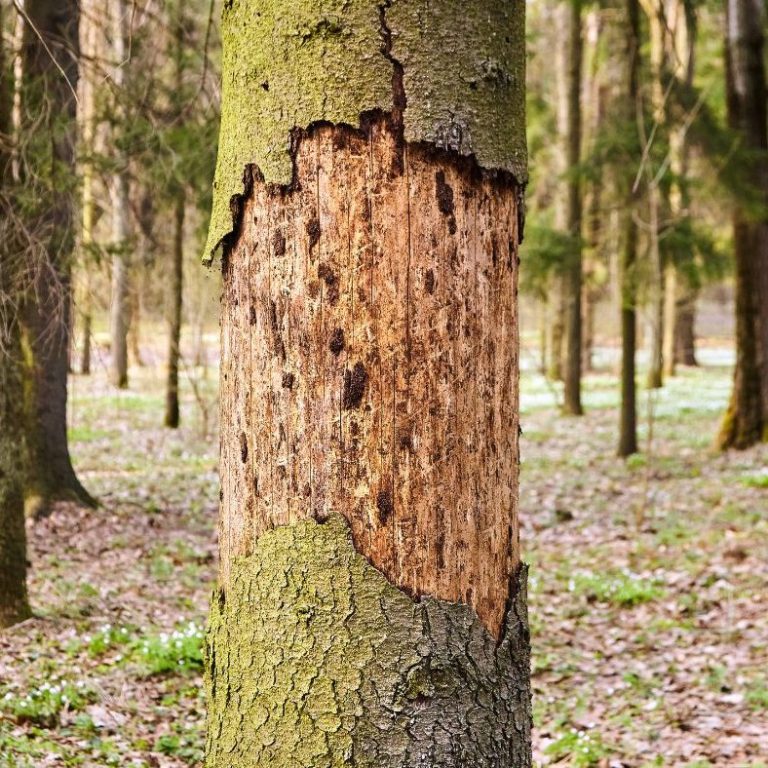
While these forests performed rather well under past climate conditions, they have become highly vulnerable today. The lack of species diversity reduces their ability to adapt to changing environmental conditions. As a result, the forests are now increasingly affected by extreme droughts and bark beetle infestations, putting them under constant stress and leading to large-scale forest degradation.
Challenge

Key Facts
Over 30%
of Germany¨s land mass is forest — about 11.5 million ha (~115,000 km²). (BMLEH - Waldzustandsbericht 2025)
4 out of 5
trees in Germany show crown loss and drought stress — a visible sign of declining forest health. (BMLEH - Waldzustandsbericht 2025)
~900,000 ha
of tree cover have been lost since 2017 — roughly 8.5% of Germany's forest area, driven by drought, heat and bark beetle outbreaks. (DLR – German Aerospace Center, satellite analysis 2025)
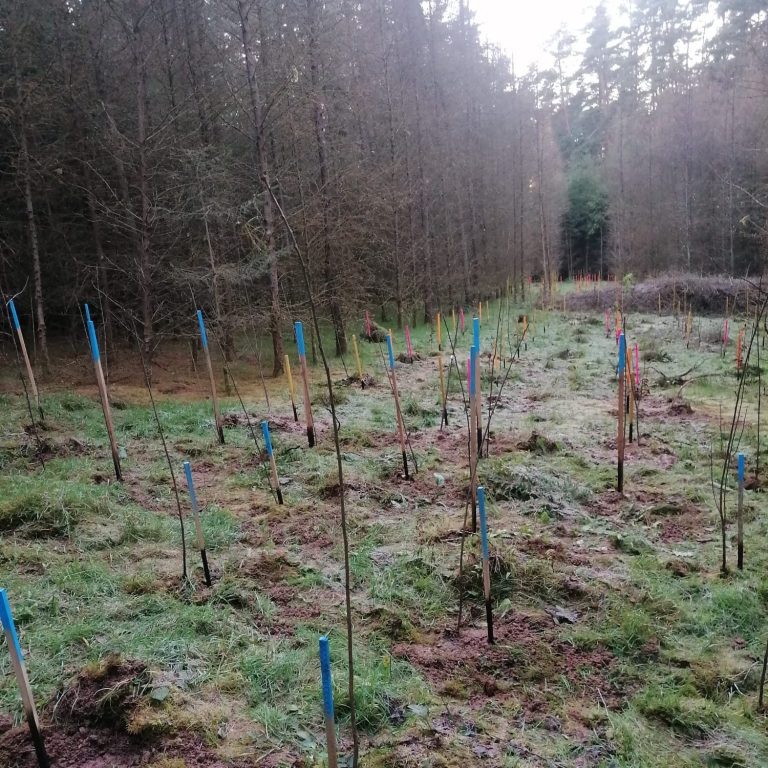
Together with my father, I have been working for several years to gradually transform our “sick” forests into more resilient and biodiverse ecosystems. This is a long-term process that requires patience, continuous learning, and close observation of nature.
Our approach focuses on increasing diversity and strengthening the forest’s ability to adapt to future climate conditions. One key measure is the gradual replacement of vulnerable monoculture species with a wider mix of tree species. We introduce both native and carefully selected non-native species that are better adapted to heat and drought, creating a more stable and climate-resilient forest structure.
Another important aspect of our work is to allow natural processes to take place. Dead trees and plant material are intentionally left in the forest, as they play a crucial role in the ecosystem. They provide habitats and nesting opportunities for birds and insects, serve as hiding places for wildlife, and contribute to soil regeneration—thereby significantly enhancing biodiversity.
Our project
We regularly collaborate with local forestry authorities to plan and evaluate the next steps. This includes professional guidance, ecological assessments, and applying for available public funding to support sustainable forest management.
At the same time, we actively seek inspiration and knowledge from other restoration projects—both within our region and internationally. Learning from existing initiatives helps us improve our approach and adapt proven strategies to our local context.
Beyond ecological restoration, our vision also includes using the forest in a sustainable and self-sufficient way in the future. By managing the forest responsibly, we aim to create a system that can provide renewable resources, such as wood for heating, without compromising the health and balance of the ecosystem.
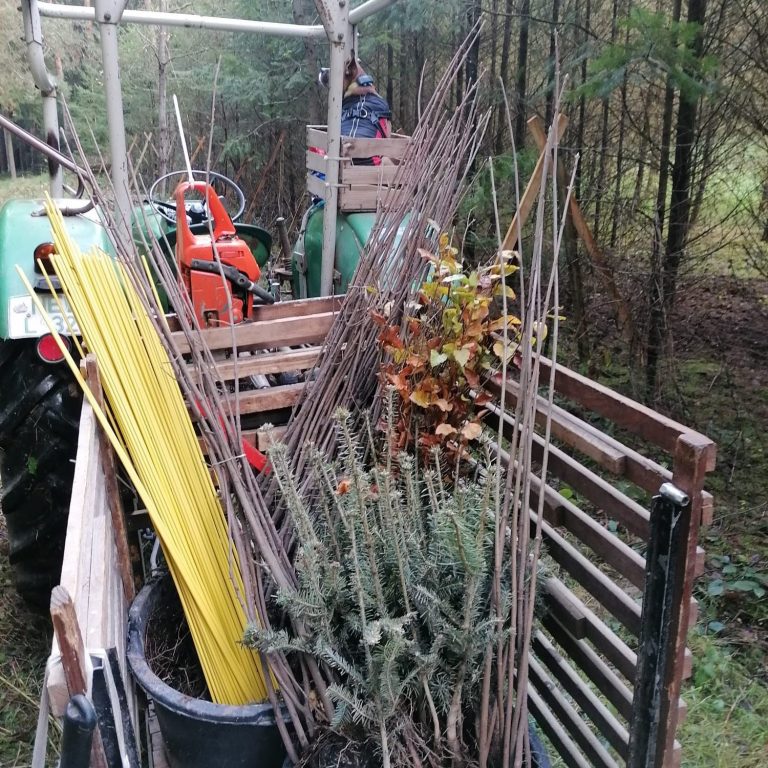
We are fully aware that this transformation is a generational task that will take decades to fully unfold. However, we are confident that the first positive results will already become visible in the coming years, step by step shaping a healthier, more resilient forest for future generations.
01
Nam tempor
Lorem ipsum dolor sit amet, consectetur adipiscing elit. Nulla euismod condimentum felis vitae efficitur. Sed vel dictum quam, at blandit leo.
02
Nomy eirmod
Lorem ipsum dolor sit amet, consectetur adipiscing elit. Nulla euismod condimentum felis vitae efficitur. Sed vel dictum quam, at blandit leo.
03
Stet clita kasd
Lorem ipsum dolor sit amet, consectetur adipiscing elit. Nulla euismod condimentum felis vitae efficitur. Sed vel dictum quam, at blandit leo.
04
Sea takimata
Lorem ipsum dolor sit amet, consectetur adipiscing elit. Nulla euismod condimentum felis vitae efficitur. Sed vel dictum quam, at blandit leo.