Promoting Environmental Education through Aquaponics


The Challenge
Agriculture is increasingly challenged by climate change, resource scarcity, and growing food demand. Rising temperatures, prolonged droughts, extreme weather events, and soil degradation are placing significant pressure on conventional farming systems worldwide. At the same time, a growing global population requires more food to be produced with fewer available natural resources. Agriculture also remains heavily dependent on freshwater and chemical inputs, raising concerns about environmental impacts and long-term sustainability. These challenges highlight the need for more resilient and resource-efficient approaches to food production.
Key Facts
Over 90%
Aquaponic systems can reduce water consumption by up to 90% compared with conventional soil-based agriculture thanks to water recirculation.
(FAO, 2018)
15O species
More than 150 species of vegetables, herbs, flowers, and small trees have been successfully grown in aquaponic systems worldwide.
(FAO, 2021)
72%
Agriculture accounts for approximately 72% of global freshwater withdrawals, making water-efficient farming systems such as aquaponics increasingly important.
(FAO, 2025)
Our project
Fish & Seeds was developed by five first-year students at EDHEC Business School to introduce aquaponics to primary school children in Roubaix. Through a series of interactive workshops, the project encouraged children to explore sustainable food production and innovative agricultural techniques in a fun and practical way.
The main objective was to inspire environmental awareness from an early age. As the decision-makers of tomorrow, children play a key role in building a more sustainable future. By introducing them to aquaponics, the project sought to foster curiosity, environmental responsibility, and a lasting interest in sustainable development.
To maximize the impact of the project, we established partnerships with several primary schools in Roubaix and worked closely with teachers to organize educational workshops on aquaponics and sustainable agriculture.
These workshops were designed to encourage children's curiosity and environmental awareness through hands-on activities.
We also promoted the initiative through local media, with articles published in regional newspapers such as La Voix du Nord and Nord Littoral. This media coverage helped raise public awareness of the project and highlighted the importance of environmental education for younger generations.
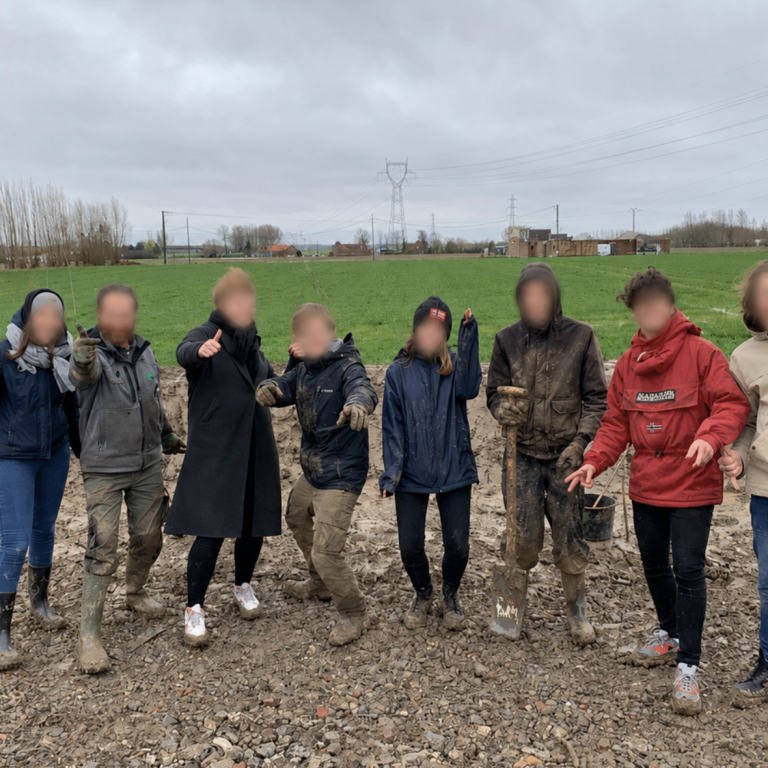
In addition, we participated in two community tree-planting events organized by a local eco-village. These activities allowed us to engage with local residents, strengthen our commitment to environmental action, and exchange ideas with people involved in sustainability initiatives.
Learning from Living Systems
Water Cycles
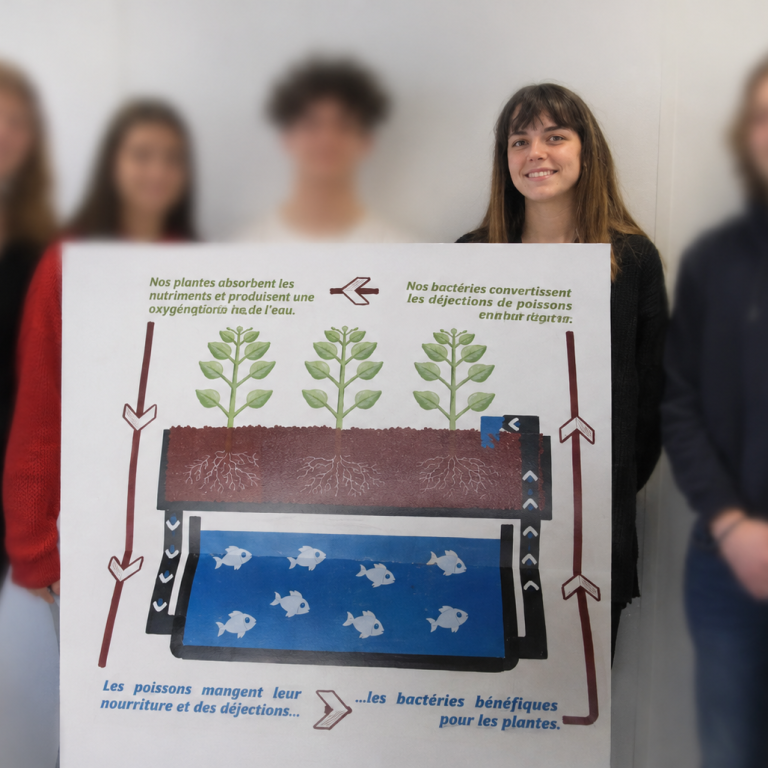
Aquaponics begins with water as the central resource. Instead of being used once and wasted, water circulates through the system, connecting fish, plants, and natural filtration processes.
Resource Awareness
Fish & Seeds encourages a more conscious view of food production. It highlights how much water, space, and external input conventional agriculture often requires, and how circular systems can reduce this dependency.
Future Thinking
Beyond growing food, the project is a learning space for imagining more resilient food systems. It invites people to explore how nature-based principles can inspire sustainable solutions for the future.
Natural Balance
The project shows how different living elements can support each other. Fish provide nutrients, plants clean the water, and beneficial bacteria help transform waste into growth.